Style direction
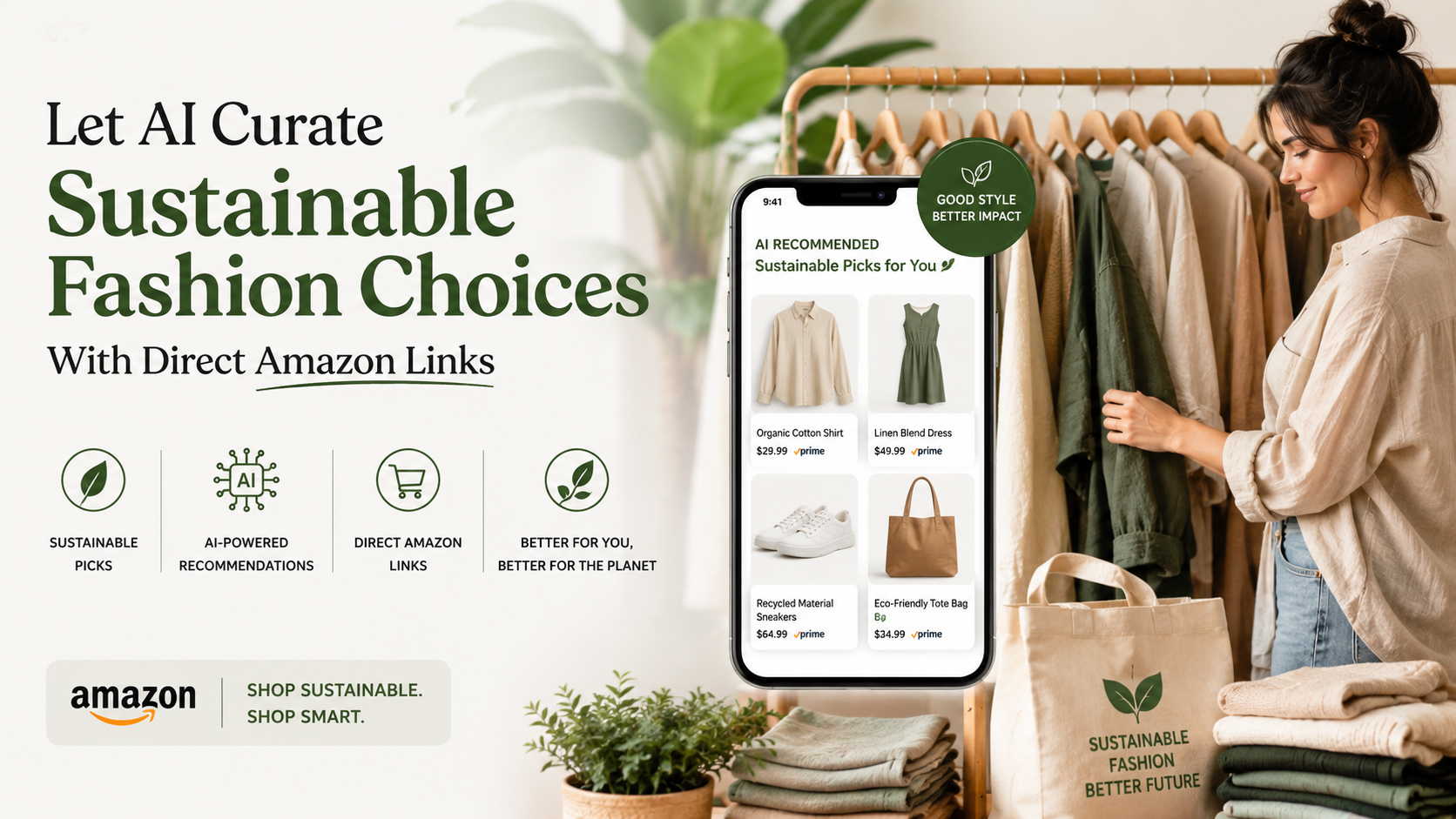
Let AI Help You Find Sustainable Fashion That Matches Your Style
The right sustainable piece should solve taste, fit, fabric, and sourcing at once.
01
Start With Taste
Sustainable shopping gets ugly when taste is treated as the enemy. That is how people end up in oatmeal sacks, rubbery recycled sneakers, and T-shirts printed with a conscience. The better approach is less dramatic. Start with what already makes you look like yourself: your line, your color range, your preferred formality, the amount of texture your face can carry, the silhouettes you reach for when nobody is watching.
AI is useful here because it can read patterns faster than you can. Not taste in the mystical sense. Taste as evidence. If every saved outfit has straight-leg denim, compact knitwear, black leather, and a cropped jacket, the answer is not a floaty hemp tunic because the product page said ethical. The answer is probably organic cotton denim, recycled wool knitwear, vegetable-tanned leather, and a jacket cut with the same hard edge you already like.
Sustainability only works when the clothes get worn. A noble garment left in a drawer is just expensive guilt with buttons.
02
Cleaner Materials
Fabric is where most of the sustainability story lives, and fabric also decides how the garment behaves on your body. Organic cotton poplin has crispness. Tencel lyocell falls with a soft vertical line. Hemp blends look better when they have structure, because pure hemp can drift into art-teacher territory if the cut is too loose. Recycled wool flannel gives depth without the dry boardiness of some recycled synthetics.
This is why an AI shopping search needs material instructions, not just brand names. Ask for the hand of the cloth, the expected drape, the season, and the level of polish. A black trouser in recycled polyester twill and a black trouser in RWS-certified wool are not the same garment. One can shine under office lighting. The other absorbs light and looks calmer.
Use cleaner materials where they improve the piece, not where they merely decorate the hangtag.
- Choose Tencel lyocell when you want fluid drape and cool wear.
- Pick organic cotton poplin for shirts that hold a cleaner collar.
- Use recycled wool flannel for trousers with weight and shadow.
- Try hemp-cotton blends when you need texture without stiffness.
- Reserve deadstock nylon for outerwear, bags, and technical layers.
03
Use AI Precisely
The prompt matters. A vague search gives you vague virtue. Feed AI the same brief you would give a good stylist: photos, height, build notes, climate, work setting, weekend habits, budget, colors you dislike, and the garments you wear to death. Add the part most people skip, which is social context. Clothes for a design studio, a law office, a barista job, and a dinner in Silver Lake all carry different signals.
Then ask for direct shopping links only after the style logic is set. Links without a framework turn into a browser tab swamp. A useful AI result should explain why a garment belongs: the shoulder slope works with your frame, the rise balances your torso, the color sits inside your palette, the fabric meets your sourcing standards, and the brand has a credible supply-chain claim.
That last sentence is the difference between shopping assistance and a prettier search engine.
04
Interrogate The Link
A direct shopping link is not a verdict. It is a lead. The product page still needs to earn its place, because sustainable language is cheap and fabric is not. Watch for lazy words like conscious, eco, planet-friendly, and responsible when they arrive without numbers, certifications, mill names, or repair information. A brand does not need to be perfect. It does need to be specific.
Look at the photos with suspicion too. If every shot is front-facing on a six-foot model with the jacket clipped at the back, you are not seeing the garment. Search for side views, close-ups of the fabric, sleeve length on a moving arm, and customer photos if available. A sustainable blazer that collapses at the chest is still a bad blazer.
The link should survive a small interrogation before it gets your card details.
- Check fiber percentages before trusting the sustainability headline.
- Read care labels to avoid dry-clean-only daily basics.
- Compare garment measurements against clothes that already fit.
- Scan return terms before testing unfamiliar denim or shoes.
- Look for repair, resale, or take-back programs.
05
Make It Wearable
The cleanest wardrobe is the one that behaves under pressure. Monday morning. Rain. Bad sleep. No imagination. Sustainable pieces need to slot into outfits without a ceremony. That means building around repeatable proportions: a cropped jacket over a longer tee, a soft knit with pleated trousers, a boxy overshirt with straight denim, a ribbed tank under an unstructured blazer.
Color does most of the quiet work. If your face looks better against low-contrast tones, build around charcoal, tobacco, washed navy, olive, bone, and faded black. If you need sharper contrast, go cleaner: optic white, true navy, black, oxblood, and dark indigo. Sustainable fashion often defaults to beige because beige photographs as harmless. Beige is not a personality.
Direct links should form outfits, not orphan purchases. Ask AI to show each item with two or three existing pieces in your closet. If the new garment cannot make friends, it is not sustainable for you.
06
Buy Fewer, Better
Price needs a colder conversation. A $220 organic cotton overshirt worn twice is waste with better branding. A $320 recycled wool coat worn for four winters is normal math. Cost-per-wear is not glamorous, but neither is a wardrobe full of almost-right things.
AI can help by filtering for longevity signals: replaceable buttons, proper seam allowance, lined sleeves, welt pockets that do not gape, denim with enough cotton to break in, knitwear with tight ribbing at the cuff. These details sound small because they are. Small details decide whether clothing survives actual life.
Secondhand belongs in the search too. The most sustainable version of a Margiela cardigan, Levi's 501, Patagonia fleece, or Jil Sander coat may already exist. The trick is knowing which shapes suit you before you start scrolling. Otherwise resale becomes another place to buy someone else's fantasy.
07
Your Style Brief
Fix.Style builds this search around your actual face, proportions, color temperature, wardrobe gaps, and tolerance for risk, then turns it into a style brief you can shop from without drowning in virtuous beige. For this query, the Style pack is the right lane: it gives you the aesthetic direction, the silhouettes, the fabric logic, and the buying priorities before you chase direct shopping links. The cleaner wardrobe is not the one with the loudest sustainability copy. It is the one you wear naturally, repair when needed, and replace less often. Start with the system, then shop.
Watch